Designed & manufactured in Herefordshire, UK — shipping worldwide Mon–Thu 9–5 | Fri 9–4 | +44 (0)1981 241668

A horizontal axis wind turbine turns moving air into electricity through a rotor, gearbox or direct-drive generator, and control system. Its blades rotate around an axis parallel to the wind. This familiar design dominates modern wind farms, from offshore arrays with towering steel foundations to compact turbines on agricultural land. Horizontal axis wind turbines are not simply giant fans. Their performance depends on aerodynamics, turbulence, blade materials, grid connection, maintenance, and local wildlife conditions.
The Global Wind Energy Council reported that the world added 117 gigawatts of new wind capacity in 2023, bringing total installed capacity above 1,000 gigawatts. The International Energy Agency also identifies wind power as a central technology for reducing electricity-sector emissions. These figures show strong momentum, but they do not erase practical limits. Wind speeds change by the minute. Salt spray attacks offshore components. A poorly chosen site can undermine an otherwise excellent machine.
The engineering principle has a clear boundary. German physicist Albert Betz stated, “The maximum possible fraction of the kinetic energy of the wind that can be captured by an ideal turbine is 16/27.” That limit, known as the Betz limit, explains why no turbine can capture all available wind energy. Real machines perform below it because of blade drag, wake losses, mechanical friction, and electrical conversion losses. The U.S. Department of Energy notes that horizontal-axis designs remain the predominant commercial configuration. Still, “predominant” does not mean perfect. Understanding how these turbines work requires examining their structure, operating choices, benefits, and unresolved trade-offs.
What Is a Horizontal Axis Wind Turbine?
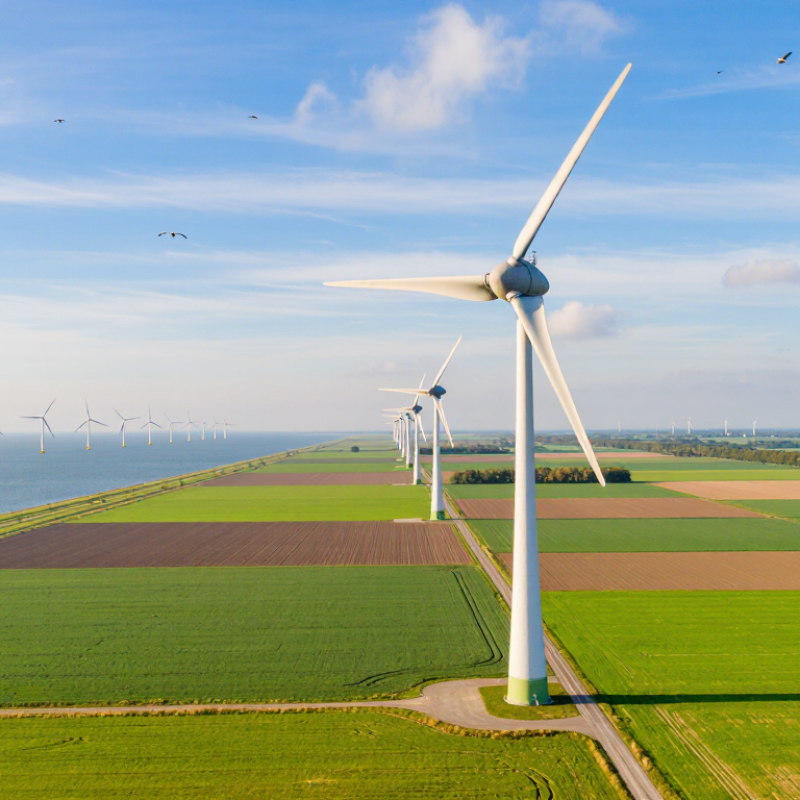
A horizontal axis wind turbine, or HAWT, has a rotor shaft parallel to the ground. Its blades face the incoming wind, like an aircraft propeller mounted on a tall tower. Wind turns the blades, and the rotor transfers mechanical energy through a drivetrain or direct-drive generator. Electricity then moves through power electronics and a transformer.
The core concept is alignment. A yaw system turns the nacelle so the rotor meets changing wind direction. Pitch controls adjust each blade’s angle, balancing energy capture, loads, and safety. Modern utility turbines often use three blades because this arrangement offers smooth rotation and practical structural balance. The tower raises the rotor above slower, more turbulent air near the ground. Small details matter.
According to the Global Wind Energy Council’s Global Wind Report 2024, the world added about 117 gigawatts of wind capacity in 2023, reaching roughly 1,021 gigawatts in total. IRENA’s Renewable Capacity Statistics 2024 reported approximately 1,017 gigawatts of installed wind power at the end of 2023. These figures include different project categories, so reporting methods can vary slightly. HAWTs remain central to large wind projects, yet their design is not perfect. Taller towers, longer blades, noise limits, wildlife concerns, and maintenance access still shape real-world performance. A turbine can capture strong wind efficiently, but only when engineering, weather, grid conditions, and local planning work together.
| Data Dimension | Core Information | Typical or Relevant Values |
|---|---|---|
| Definition | A wind turbine whose rotor shaft is oriented approximately parallel to the ground and generally aligned with the incoming wind. | Horizontal rotor axis; usually operated as an upwind or downwind machine. |
| Primary Energy Conversion | Converts the kinetic energy of moving air into rotational mechanical energy, then into electrical energy through a generator. | Wind energy → rotor rotation → drivetrain or direct drive → electricity. |
| Main Rotor Components | The rotor consists of blades connected to a central hub. The blades generate aerodynamic lift as air flows across their airfoil-shaped surfaces. | Common configurations: three blades for utility-scale turbines; two-blade designs also exist. |
| Nacelle | The housing mounted behind the rotor that contains major equipment such as the generator, bearings, control systems, and, in some designs, a gearbox. | Located at the top of the tower; equipment layout varies by turbine design. |
| Tower and Foundation | The tower elevates the rotor into stronger and less turbulent wind, while the foundation transfers structural loads into the ground or seabed. | Tower height is site-specific and commonly increases with rotor diameter and project scale. |
| Yaw System | Adjusts the nacelle and rotor direction so the rotor faces the wind in an upwind configuration. | Uses wind-direction sensors, control logic, and yaw drives or brakes. |
| Pitch System | Changes the angle of each blade to regulate aerodynamic forces, power output, and rotor speed. | Can feather blades during high winds or shutdown conditions. |
| Cut-In Wind Speed | The minimum wind speed at which the turbine begins producing usable electrical power. | Often approximately 3–4 m/s, depending on the design and control settings. |
| Rated Wind Speed | The wind speed at which the turbine reaches its rated electrical power under standard operating conditions. | Frequently around 10–15 m/s, depending on the turbine model and site design. |
| Cut-Out Wind Speed | The wind speed at which the turbine shuts down to protect the rotor, drivetrain, tower, and foundation from excessive loads. | Often approximately 20–25 m/s, although the exact value is design-specific. |
| Theoretical Efficiency Limit | The Betz limit states that an ideal wind turbine cannot extract more than 59.3% of the wind's kinetic power because air must continue moving through the rotor. | Maximum theoretical power coefficient: approximately 0.593. |
| Power Relationship | Available wind power increases with air density, swept area, and the cube of wind speed. | P = ½ρAv³Cp; ρ = air density, A = swept area, v = wind speed, Cp = power coefficient. |
| Swept Area | The circular area covered by the rotating blades and the primary area through which the rotor intercepts wind. | A = πD²/4, where D is the rotor diameter. |
| Advantages | High aerodynamic efficiency, mature engineering principles, scalable capacity, and effective use of strong winds at greater heights. | Widely used for utility-scale onshore and offshore wind generation. |
| Limitations | Requires orientation control, experiences changing aerodynamic loads as blades rotate, and usually needs a tall tower and substantial foundation. | Performance depends strongly on wind quality, turbulence, terrain, maintenance access, and environmental conditions. |
| Typical Applications | Used for large-scale electricity generation and, in smaller forms, for distributed or community power systems. | Onshore wind farms, offshore wind farms, agricultural installations, and remote power systems. |
It has a rotor shaft parallel to the ground. Its blades face incoming wind like an aircraft propeller. Wind turns the blades, and a generator converts motion into electricity. Small details matter.
Wind creates lift on the blades and rotates the rotor. The rotor drives a main shaft and generator. A gearbox may increase rotation speed. Direct-drive designs remove the gearbox. Electrical equipment then adjusts voltage and frequency for the grid.
A tall tower raises the rotor above slower, rougher air near the ground. Higher airflow can improve energy capture. However, taller towers require stronger structures and more difficult maintenance access. The extra height is not automatically better.
The yaw system turns the nacelle toward changing wind directions. Pitch controls change each blade’s angle. These adjustments balance energy capture, structural loads, and safety. Poor sensor calibration can reduce their value.
Three blades usually provide smooth torque and practical structural balance. Two blades can reduce material use. However, two-blade designs may produce more noticeable rotational variation. Neither option wins everywhere.
Geared systems increase rotor speed before electricity reaches the generator. They can use a smaller generator but include gearbox wear. Direct-drive systems remove the gearbox. They may require larger, heavier generators. The best choice depends on site conditions and maintenance plans.
Both designs use horizontal shafts and wind-facing rotors. Offshore turbines need stronger corrosion protection and foundations for waves. Salt can damage surfaces and fasteners. Maintenance at sea is slower and more expensive. Models can miss field problems.
Choose sites using measured wind data, not assumptions. Inspect blades, bearings, cables, fasteners, and vibration regularly. Check for edge erosion and small cracks. Review noise, shadow, wildlife, and grid requirements before construction. Inspections reduce risk, but they cannot remove every risk.
Horizontal axis wind turbines are renewable energy systems whose rotor shaft is positioned parallel to the ground, with blades rotating around a horizontal axis. They typically include rotor blades, a hub, nacelle, gearbox or direct-drive generator, main shaft, tower, foundation, and control systems. The blades capture the kinetic energy of moving air, causing the rotor to spin; this mechanical motion is then transferred to a generator, which converts it into electrical power. Sensors and control mechanisms adjust the turbine’s direction and blade angle to improve performance and maintain safe operation.
Horizontal axis wind turbines can vary in blade number, rotor size, tower height, drivetrain design, and installation environment. Most modern models face into the wind, while others use different orientation or control arrangements. Their main advantages include high efficiency, scalability, and suitability for both land-based and offshore projects. However, they require significant space, careful maintenance, favorable wind conditions, and attention to visual, noise, wildlife, and grid-integration considerations. They are commonly used in utility-scale wind farms, distributed power systems, and remote energy applications.